.png) Wrong-way crashes are among the deadliest events on Massachusetts roads and state lawmakers have finally taken decisive action. In a unanimous 40-0 vote, the Massachusetts Senate approved a sweeping amendment to the Fiscal Year 2027 budget that would require new safety infrastructure, advanced detection systems, and mandatory law enforcement training to combat the growing threat of wrong-way driving on the Commonwealth’s highways. These developments came in direct response to a series of tragic wrong-way collisions, including the heartbreaking line-of-duty death of a Massachusetts State Trooper.
Wrong-way crashes are among the deadliest events on Massachusetts roads and state lawmakers have finally taken decisive action. In a unanimous 40-0 vote, the Massachusetts Senate approved a sweeping amendment to the Fiscal Year 2027 budget that would require new safety infrastructure, advanced detection systems, and mandatory law enforcement training to combat the growing threat of wrong-way driving on the Commonwealth’s highways. These developments came in direct response to a series of tragic wrong-way collisions, including the heartbreaking line-of-duty death of a Massachusetts State Trooper.
For those of us in MetroWest Massachusetts, where roadways like Route 9, Route 30, and I-90 (MassPike) have each seen recent wrong-way tragedies, this legislation could not come soon enough. As a Massachusetts car accident attorney practicing in Framingham, I have written about the devastating toll of wrong-way crashes and personally seen the life-altering consequences they leave behind. This new legislative action is a meaningful step forward. But for the many accident victims and families already suffering the consequences of these crashes, the law provides important rights to seek the compensation they deserve.

A Dangerous and Growing Problem on Massachusetts Roads
Wrong-way crashes are not new to Massachusetts, but the frequency and severity of recent incidents signal an alarming trend. Over the past several months, I have written about two serious wrong-way crashes that demonstrate just how catastrophic these collisions can be.
In February 2026, a wrong-way driver on Route 1 in Peabody caused a multi-vehicle collision that injured five people, one of them seriously. Law enforcement shut down multiple lanes for hours as investigators worked the scene. Just weeks later, on February 20, 2026, a fatal wrong-way crash on Route 9 East near the Framingham–Southborough line killed a 37-year-old woman from Leominster. Surveillance footage from a nearby business captured a vehicle traveling west in the eastbound lanes moments before impact.
These two tragedies are part of a larger pattern. Our office has seen a noticeable increase in calls from people injured in wrong-way collisions. Massachusetts routes including Route 9, Route 1, Route 128, and the Massachusetts Turnpike have each been the site of serious wrong-way incidents. The human cost has been severe: lives lost, families shattered, and survivors facing years of recovery.
|
Related Reading From Our Blog: • The Hidden Dangers of Wrong-Way Crashes in Massachusetts • Deadly Wrong-Way Crash on Route 9 on the Framingham–Southborough Line |
What the New Legislation Requires
The Senate amendment would require the Massachusetts Department of Transportation (MassDOT) to develop and maintain a comprehensive statewide plan to reduce wrong-way driving on limited-access highways. It is a multi-pronged approach addressing the physical roadway environment, real-time detection technology, driver education, and law enforcement readiness.
Roadway Safety Improvements
MassDOT would be required to implement a range of physical safety improvements at high-risk ramps and access points, prioritized based on past incidents. These include:
- Directional striping on highway ramps
- Enhanced signage and lane markings
- Improved lighting at key entry and exit points
- Lane delineators and other roadway design upgrades
Advanced Detection and Real-Time Alert Systems
Perhaps the most significant element of the amendment is the requirement for advanced wrong-way detection systems. These systems would identify wrong-way drivers in real time and trigger multi-sensory alerts to warn the driver and immediately notify public safety officials. Messaging systems would also broadcast alerts to other motorists when a wrong-way driver is detected on a given roadway.
Education, Training, and Public Awareness
The amendment also calls for meaningful reforms to driver education and law enforcement readiness:
- Driver education programs would be required to include instruction on the dangers of wrong-way driving and how to avoid it
- All Massachusetts law enforcement officers would receive mandatory training starting in 2027 on how to respond to wrong-way driving incidents
- The Registry of Motor Vehicles (RMV) would lead a statewide public awareness campaign
Study of Older Driver Risk Factors
The proposal also calls for a study of drivers over the age of 70, examining potential risk factors, roadway design issues, and strategies to improve safety for older motorists. Driver confusion, particularly among elderly or unfamiliar drivers, has long been identified as a contributing factor in wrong-way incidents, and this study could lead to meaningful targeted interventions.
MassDOT would be required to provide annual progress reports to state lawmakers, ensuring accountability and transparency in the rollout.
Why Wrong-Way Crashes Cause the Most Catastrophic Injuries
The legislative response is urgently needed because wrong-way crashes are not ordinary accidents. They are among the most violent and fatal collision types that occur on public roads. Unlike a rear-end collision or a sideswipe, a wrong-way crash typically results in a head-on impact between two vehicles traveling in opposite directions, often at highway speeds. The forces generated in such a collision are enormous, frequently overwhelming both the human body and even modern vehicle safety systems.
Research from the National Transportation Safety Board (NTSB) and the Federal Highway Administration (FHWA) consistently confirms that wrong-way crashes are disproportionately deadly. Though they represent only a small fraction of all crashes, they account for a far greater share of traffic fatalities. When a wrong-way driver travels on a divided highway at 60 or 70 miles per hour and collides head-on with an oncoming vehicle, the physics are unforgiving.
Making these crashes even more dangerous is the element of surprise. Motorists traveling in the correct direction typically have only a fraction of a second to react. Many wrong-way crashes occur at night or in low-visibility conditions, and impaired, fatigued, or confused drivers are frequently involved. On roadways like Route 9 through Framingham, Natick, and Southborough, a heavily traveled divided highway with multiple entry and exit points, a wrong-way driver can cover significant distance before being detected.
|
Common Causes of Wrong-Way Crashes in Massachusetts: • Impaired driving due to alcohol or drugs • Driver confusion, particularly among elderly or unfamiliar drivers • Fatigue or distraction during overnight or early morning hours • Poorly marked or maintained highway signage • Inadequate lighting at ramp entry and exit points • Drivers mistaking an exit ramp for an entrance ramp |
Injuries Typically Suffered in Wrong-Way Crashes
Survivors of wrong-way crashes frequently face catastrophic, life-altering injuries. Because these collisions almost always involve head-on impact, the severity of harm is extreme. Victims commonly suffer from:
- Traumatic brain injuries (TBI), including severe concussions and diffuse axonal injuries
- Spinal cord injuries, up to and including paralysis
- Multiple broken bones and complex fractures
- Severe lacerations, internal bleeding, and organ damage
- Crush injuries requiring surgical intervention
- Post-traumatic stress disorder (PTSD) and other psychological trauma
- Chronic pain and permanent disability
The aftermath for victims and their families can be financially and emotionally overwhelming. Emergency surgeries, extended hospitalizations, inpatient rehabilitation, and long-term care can easily reach hundreds of thousands of dollars. Victims may be unable to return to work for months, years, or ever again. Families are left managing grief, fear, and deep uncertainty about the future all while the bills continue to pile up.
Your Legal Rights After a Wrong-Way Crash in Massachusetts
If you or a loved one was injured in a wrong-way crash in Massachusetts, you have legal rights. Massachusetts law allows accident victims to pursue a personal injury claim against the at-fault driver to recover compensation for the full scope of their losses.
What Compensation Can You Recover?
A personal injury claim arising from a wrong-way crash in Massachusetts may entitle you to recover the following categories of damages:
- Medical expenses: All costs associated with emergency treatment, hospitalization, surgery, diagnostic testing, physical therapy, and ongoing care
- Lost earnings: Wages, salary, and other income lost while you were unable to work due to your injuries
- Diminished earning capacity: Compensation for a reduced ability to earn income in the future if your injuries are permanent or long-lasting
- Pain and suffering: Compensation for the physical pain, emotional distress, and the impact your injuries have had on your daily life and quality of living
- Permanent injuries and disfigurement: Additional compensation reflecting the lasting nature of serious injuries such as paralysis, brain damage, scarring, or loss of limb
- Out-of-pocket expenses: Costs related to your accident and recovery, including transportation to medical appointments and household assistance
Insurance Companies Don’t Just Hand Over Money
One of the most important things accident victims need to understand is that insurance companies are not on their side. Even in cases where fault is clear, as it often is in wrong-way crashes, insurers will not simply write a check for fair compensation. Their business model depends on minimizing payouts, and they employ adjusters and defense attorneys whose job is to do exactly that.
As I have written previously, insurance companies often exploit uncertainty in the evidence, delay claims, or pressure victims into accepting quick lowball settlements long before the full extent of their injuries is known. In some wrong-way crash cases, particularly those involving catastrophic collisions, physical evidence can be so damaged that questions about liability become contested even when the facts seem obvious. Insurers may attempt to shift partial blame onto the victim or raise questions about the severity of injuries.
In a serious personal injury case, the stakes are simply too high to navigate alone. A quick settlement may seem appealing when bills are mounting and you are struggling to recover, but accepting an early offer without proper legal guidance can mean leaving hundreds of thousands of dollars on the table — money you may desperately need for future care.
|
What Insurance Companies May Try to Do After a Wrong-Way Crash: • Delay processing your claim while your bills mount • Offer a quick, low settlement before you know the full extent of your injuries • Dispute liability or attempt to shift partial blame onto you • Downplay the severity of your injuries • Use your recorded statements against you |
How an Experienced Massachusetts Car Accident Lawyer Can Help
Hiring an experienced Massachusetts car accident attorney levels the playing field. A skilled lawyer will conduct a thorough independent investigation, preserve critical evidence, and where necessary work with qualified accident reconstruction experts to establish exactly how the crash occurred and who was at fault. In wrong-way cases, this may involve analyzing surveillance footage, event data recorders (the vehicle’s “black box”), toxicology results, witness accounts, skid marks, and roadway geometry.
Beyond the investigation, an experienced attorney will handle all communications with the insurance company, protect you from tactics designed to minimize your claim, and fight aggressively for the full compensation you deserve. If a fair settlement cannot be reached through negotiation, your attorney should be prepared to take your case to trial.
Wrong-way crash cases are complex, evidence-driven, and often aggressively contested by insurers. The right lawyer makes an enormous difference both in the outcome of the case and in your ability to focus on recovery rather than legal battles.
What to Do After a Wrong-Way Crash in Massachusetts
If you have been injured in a wrong-way crash, taking the right steps immediately after the accident can make a significant difference in the strength of your personal injury claim. If you are physically able:
- Call 911 immediately and seek emergency medical attention, even if you feel your injuries are minor
- Document the scene — photograph vehicle positions, damage, skid marks, road signs, and any visible injuries
- Get the names and contact information of all witnesses
- Do not give a recorded statement to any insurance company without speaking to an attorney first
- Preserve all medical records, bills, and documentation of your treatment and recovery
- Contact an experienced Massachusetts car accident attorney as soon as possible — evidence can disappear quickly
A Step in the Right Direction — But Victims Need Justice Now
The Massachusetts Senate’s unanimous vote in favor of this wrong-way driving prevention plan is a welcome and long-overdue acknowledgment of a serious and growing safety problem on our roads. Improved signage, real-time detection systems, law enforcement training, and public awareness campaigns have the potential to prevent future tragedies. The loss of a Massachusetts State Trooper and victims like the 37-year-old Leominster woman killed on Route 9 demand nothing less than a full and committed response from the Commonwealth.
But for those already injured and for families already grieving, legislation for the future does not address the harm that has already been done. If you or someone you love has been hurt or killed in a wrong-way crash anywhere in Massachusetts, the law gives you the right to seek accountability and compensation. You should not have to face that fight alone.
Contact Attorney Pappas for a Free Consultation Today
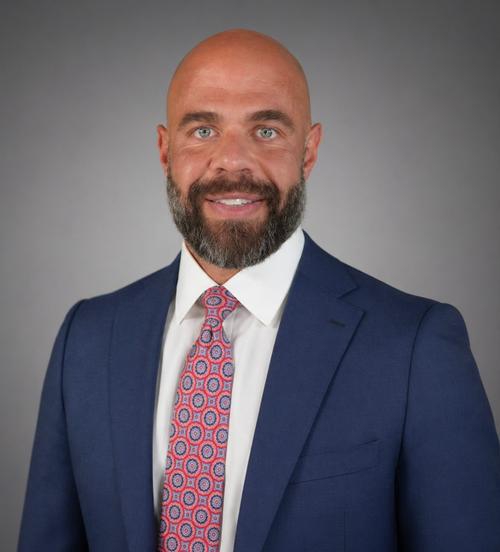
Attorney Chuck Pappas is a Massachusetts personal injury lawyer serving accident victims throughout the MetroWest region and beyond, including Framingham, Natick, Wellesley, Needham, Newton, Weston, Waltham, Marlborough, and Southborough. Attorney Pappas has extensive experience representing seriously injured clients in complex car accident cases, including wrong-way collisions on Route 9, I-90, and other major Massachusetts roadways.
Attorney Pappas offers free, no-obligation consultations to injured victims and their families. There is no upfront cost and no fee whatsoever unless he wins your case. There is simply no risk in reaching out, only the opportunity to understand your rights and explore your options with an attorney who will fight for you every step of the way.
 Don’t forget, for answers to many questions and great information on how to get the best possible settlement in your accident case, get a copy of our book: