After a car accident in Massachusetts, you may receive a call from the other driver's insurance company asking a lot of questions and for you to provide a recorded statement. In my experience, the adjusters usually come across friendly and make the request sound routine. But make no mistake: the purpose of that recorded statement is not to help you. It is to gather information the insurance company can use to limit, delay, or deny your claim.
Understanding what insurance adjusters are looking for, and how your seemingly innocent comments can undermine your case, is one of the most important things you can do to protect your rights after a Massachusetts car accident. And speaking with an experienced car accident attorney before you say a single word to the other driver's insurance company costs you nothing but could save your entire claim.
Why Insurance Adjusters Request Recorded Statements
Insurance adjusters request recorded statements because they work (for them). The other driver's insurance company has one goal: to pay you as little as possible — or nothing at all. A recorded statement gives adjusters a permanent, verbatim record of everything you say in the hours or days after the crash, when you may still be in shock, when your injuries may not yet be fully apparent, and when you are least likely to be thinking about the legal implications of your words.
Under Massachusetts law, you generally have no legal obligation to provide a recorded statement to the other driver's insurance company. Your own insurer may be a different matter. Your policy may require cooperation — but the adverse carrier has no authority to compel your statement. Yet many accident victims agree, simply because they don't know they can decline or because the adjuster frames refusal as something that will slow down the process.
The reality is that a prompt recorded statement almost always benefits the insurance company far more than the injured person. Adjusters are trained professionals who conduct these interviews every day. Most accident victims have never been through the process before.

What Insurance Adjusters Are Really Looking For
Admissions of Fault or Shared Responsibility
Massachusetts follows a modified comparative negligence rule under G.L. c. 231, § 85. If you are found more than 50% at fault for the accident, you recover nothing. Even partial fault, say, 20%, reduces your recovery by that amount. Insurance adjusters are specifically listening for any statement that could be used to argue that you bear some responsibility for the crash.
This does not require an outright "I'm sorry, it was my fault." Adjusters are trained to extract far more subtle admissions. Comments like "I was running late" or "I didn't see them coming" or "the sun was in my eyes" can all be used to suggest you were distracted, inattentive, or contributing to the accident. Even an apology offered out of politeness — a perfectly normal human response — can be characterized as an admission of fault.
Inconsistencies in Your Account of the Accident
Adjuster training emphasizes the importance of locking in your account of the crash early, before you have had time to fully process events, gather evidence, or speak with witnesses. If your statement differs in any way from what you say later to your own attorney, in your answers to interrogatories, or at a deposition — the insurance company will use that inconsistency to attack your credibility.
Memory is imperfect, especially in the aftermath of a traumatic collision. Details that seem clear in the immediate aftermath may be refined as you process what happened. An adjuster who records your initial account is not giving you the benefit of the doubt — they are creating a baseline against which every future statement will be measured.
Minimization of Your Injuries
Perhaps the single most dangerous trap in a recorded statement is the question "how are you feeling?" or "were you injured in the accident?" These questions are asked early and casually, often before the interviewer even gets to the details of the crash.
In the hours and even days after a car accident, many people genuinely do not know the full extent of their injuries. Adrenaline suppresses pain. Soft tissue injuries, including whiplash and cervical spine injuries, commonly do not present with their full symptom picture until 24 to 72 hours after impact, and sometimes longer. If you say "I'm okay" or "I don't think I was hurt that badly" in a recorded statement and you later develop significant pain, spinal injury, or require surgery, the insurance company will use your own words to argue that your injuries were not caused by the accident at all.
|
|
Never Say "I'm Fine" After an Accident Saying you feel okay or weren't badly hurt — even casually — can be used to minimize the value of your entire claim. Whiplash, herniated discs, and other soft tissue injuries often don't fully present for 24-72 hours after a crash. Always say you are still being evaluated and leave the assessment to your doctors. |
Gaps in Medical Treatment
Insurance adjusters carefully scrutinize whether your medical treatment was consistent and whether any gaps in care occurred. If you received emergency treatment and then waited two weeks before seeing your primary care physician, the adjuster will argue that the delay proves your injuries were not serious. If you stopped physical therapy before your doctor recommended, they will argue you have recovered. Every gap in your treatment timeline is an opportunity for the insurance company to argue that your injuries were minor, resolved, or unrelated to the accident.
Recording your account of medical treatment — especially if you have not yet fully understood the scope of your injuries and care needs — allows adjusters to establish a baseline that may not reflect your eventual treatment course.
How Adjusters Use Statements to Target Preexisting Conditions
One of the most aggressive tactics insurance adjusters use is mining recorded statements for evidence of preexisting injuries or medical conditions. Massachusetts law does not allow an insurance company to escape liability simply because an accident victim had a prior injury — the well-established "eggshell plaintiff" doctrine holds a defendant responsible for the full harm caused, even if the plaintiff was more vulnerable due to a preexisting condition. The aggravation or exacerbation of a preexisting injury is fully compensable.
But insurance adjusters know this, and their approach is more subtle. They are not necessarily trying to establish that you were injured before — they are trying to confuse the timeline, make it appear that your current symptoms predate the accident, or use prior treatment to suggest that any ongoing pain or limitation is "baseline" and not caused by the crash.
Questions like "Have you ever had back problems before?" or "Had you seen a doctor for neck pain prior to this accident?" are designed to uncover prior medical history that can be weaponized against your claim. If you have ever been treated for any condition that overlaps with your accident injuries — even years prior — the adjuster will pursue that thread aggressively. They will request your prior medical records, flag any mention of similar symptoms, and argue to your insurance company, any mediator, or a jury that your injuries are not new.
|
|
Prior Injuries Do Not Bar Your Claim — But Be Careful Under Massachusetts law, if the accident made a prior injury worse, you are entitled to compensation for that aggravation. But adjusters will use your own statements about past treatment to minimize or eliminate what you are owed. An attorney can help you present your medical history accurately and in context. |
Common Traps in Recorded Statements
The "Just Confirm a Few Details" Opening
Many recorded statement interviews begin with the adjuster characterizing the call as a simple formality — just confirming basic details of the accident, checking a few facts. This framing is designed to put you at ease and make you feel that the stakes are low. In reality, the record begins from the first word. Even your description of where you were going, what you were doing before the accident, or how fast you were traveling can be used against you.
Open-Ended Questions About the Scene
Adjusters often ask broad, open-ended questions about the accident scene: "Just describe in your own words what happened." These invitations to speak freely are intentional. The more you say, the more material the adjuster has to work with. Volunteering details about road conditions, your speed, any distractions, whether you used your phone, or your emotional state before the crash can all create vulnerabilities in your claim that would not exist if you had said less.
Questions Designed to Minimize Pain and Suffering
"On a scale of one to ten, how would you rate your pain?" This question, simple as it sounds, is a trap. Whatever number you give on the day of the recorded statement — when you may still be in shock, may have taken pain medication, or may simply be underreporting as people tend to do — becomes part of the permanent record. If you later report higher pain levels to your treating physician, the adjuster will say your pain has stayed stable or that you are exaggerating.
Requests to Describe Daily Limitations
Adjusters may ask you to describe how the accident has affected your daily life. Questions about whether you can still drive, work, exercise, or perform household tasks are designed to establish a baseline. If you underreport limitations early and later claim significant lost earning capacity or loss of enjoyment of life in your claim, those statements will be used to contradict you.
Seemingly Casual Small Talk
Some of the most damaging content in recorded statements comes not from direct questions about the accident, but from small talk before and after the formal interview. Adjusters are trained to keep the recorder running and to build rapport. Comments about your weekend, your work schedule, an upcoming trip, or physical activities you mentioned in passing have all been used to undermine injury claims. If you told the adjuster you went for a long hike the weekend after the accident, you can expect to hear that in the context of your claim.
Your Rights Under Massachusetts Law
Massachusetts is a no-fault state for basic PIP (Personal Injury Protection) benefits, meaning your own auto insurer covers initial medical expenses up to $8,000 regardless of fault. But for damages beyond PIP — including pain and suffering, significant medical expenses, and lost wages — you must meet the threshold under M.G.L. c. 231, § 6D and pursue a claim against the at-fault driver's liability insurance.
That liability claim is exactly what the other driver's insurance company is trying to minimize or defeat when they request a recorded statement. You have the right to consult with an attorney before speaking with the adverse carrier. You have the right to decline a recorded statement. And you have the right to have an attorney present during any interview with your own insurance company, to the extent cooperation is required.
The at-fault driver's insurer works for the at-fault driver — not for you. Their adjusters are not on your side, no matter how pleasant or professional they seem. Protecting your rights requires treating this as what it is: an adversarial process.
When It Makes Sense to Speak With an Attorney First
The short answer is: always, and before any recorded statement. But the stakes are especially high in certain situations that are common in Massachusetts car accident cases.
If you suffered any injury that required medical treatment beyond the emergency room, you should speak with an attorney before giving any statement. Soft tissue injuries, whiplash, cervical spine injuries, herniated discs, traumatic brain injuries, and broken bones can all develop or worsen in the days and weeks after a crash. An attorney can help you understand how to describe your injuries accurately without minimizing or overstating them.
If liability is disputed — if the other driver or their insurer is claiming you were at fault in whole or in part — an attorney is essential before you speak. In Massachusetts' comparative negligence framework, how you describe the accident can directly affect the percentage of fault attributed to you and, accordingly, the amount you recover.
If you have any prior injuries or medical conditions involving body parts that were affected in the accident, an attorney should review your situation before you speak to anyone. The interaction between prior treatment records and your current claim requires careful navigation.
And if you are still treating, have not yet received a full diagnosis, or are unsure about the extent of your injuries, giving a recorded statement before your medical picture is clear is almost always a mistake. Adjusters will lock in your early, incomplete account and use it against the fuller picture that develops over time.
Protect Your Claim: Contact Attorney Chuck Pappas Before You Speak to Any Adjuster
A recorded statement is not a casual conversation. It is evidence that the other driver's insurance company will use to pay you less. The adjusters conducting these interviews are professionals doing their jobs, and their job is to protect their employer's bottom line, not to make sure you receive fair compensation for your injuries.
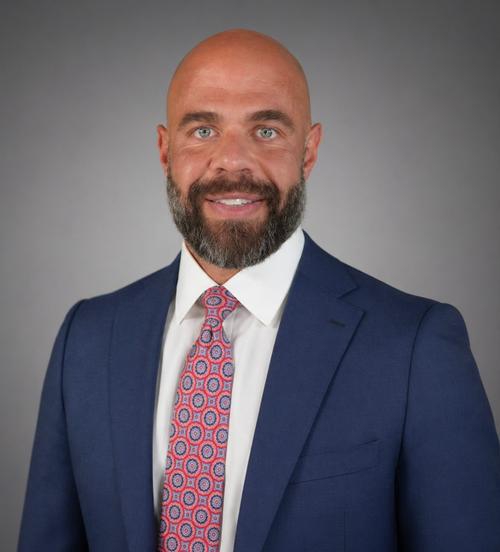
You deserve to have someone in your corner who is equally experienced and equally focused on your interests. Framingham car accident attorney Chuck Pappas has the knowledge of Massachusetts personal injury law, the experience with insurance company tactics, and the commitment to his clients that makes a difference in the outcome of car accident claims throughout MetroWest and Greater Boston.
Speaking with Attorney Pappas before giving any recorded statement is strongly recommended — and it is completely free. There is no obligation, and there is no fee unless you recover. The consultation takes less than an hour and could protect the full value of your claim.
 Don’t forget, for answers to many questions and great information on how to get the best possible settlement in your accident case, get a copy of our book: